


Course
Spirometry in practice
€99.00
Description
Pulmonary function testing is a term used to describe certain examinations that assess and measure lung function. These tests aim to:
-
diagnose lung diseases,
-
evaluate the severity of lung conditions,
-
and monitor treatment effectiveness.
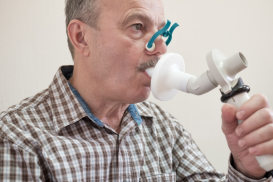
Spirometry, one of the pulmonary function tests, can be performed simply in a clinic or even at home. More advanced measurements, such as gas diffusion, body plethysmography, cardiopulmonary exercise tests, and inhalation challenge tests, require a hospital setting.
Content table
Introduction
1. Spirometry
1.1 What is spirometry?
1.2 What does spirometry record?
1.3 Looking for evidence of restrictive or obstructive lung disease
1.4 Limitations of spirometry
Learning point: Lung volumes in a healthy patient
2. Performing spirometry
2.1 The national spirometry registry
2.2 Standard operating procedure
2.3 How to prepare for the procedure?
2.3.1 Patient instructions for attending the appointment
2.3.2 Contraindications to the procedure
2.3.3 How do you guide your patient through the procedure?
2.3.4 Perform a relaxed vital capacity (RVC) maneuver
2.3.5 Perform a forced vital capacity (FVC) maneuver
3. Reporting results
3.1 What errors can occur when performing spirometry?
3.2 What can spirometry tell me?
3.2.1 The FEV1/FVC ratio (or FEV1/RVC ratio)
3.3 Obstructive lung disease
3.3.1 Common causes of obstructive lung disease
3.4 Restrictive lung disease
3.4.1 Common causes of restrictive lung disease
3.5 Distinguishing between patients with asthma and patients with COPD
3.6 When to refer for specialist advice?
Teaching moment: Summary of patterns suggested by spirometry
Lesson learned: Calculate percentage change in FEV1
4. Summary
4.1 Key points
4.2 Clinical tips
Conclusion